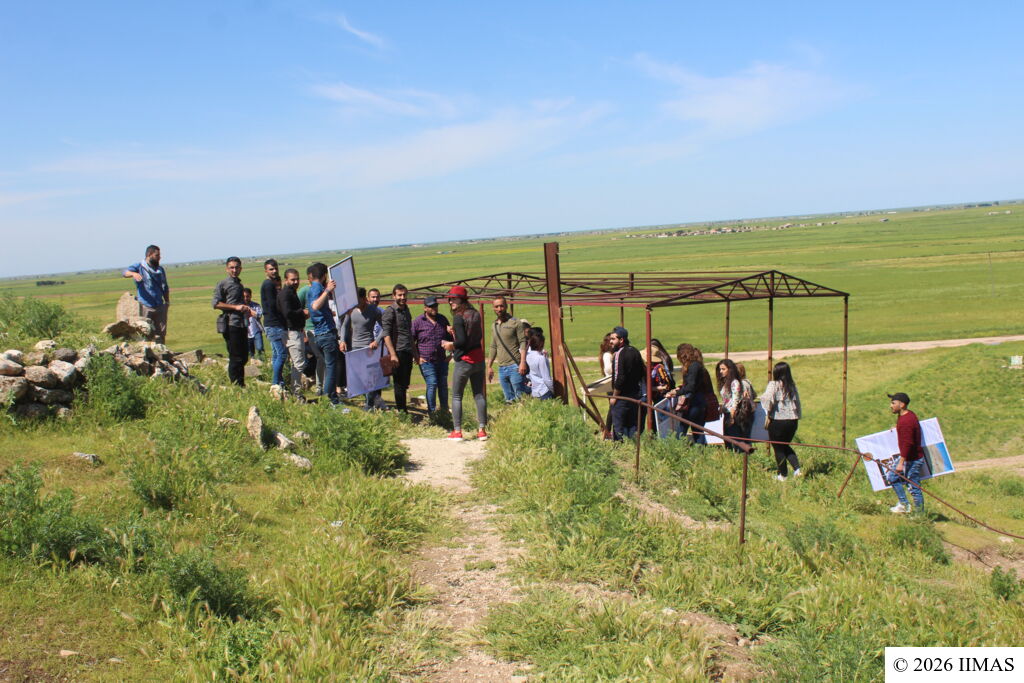
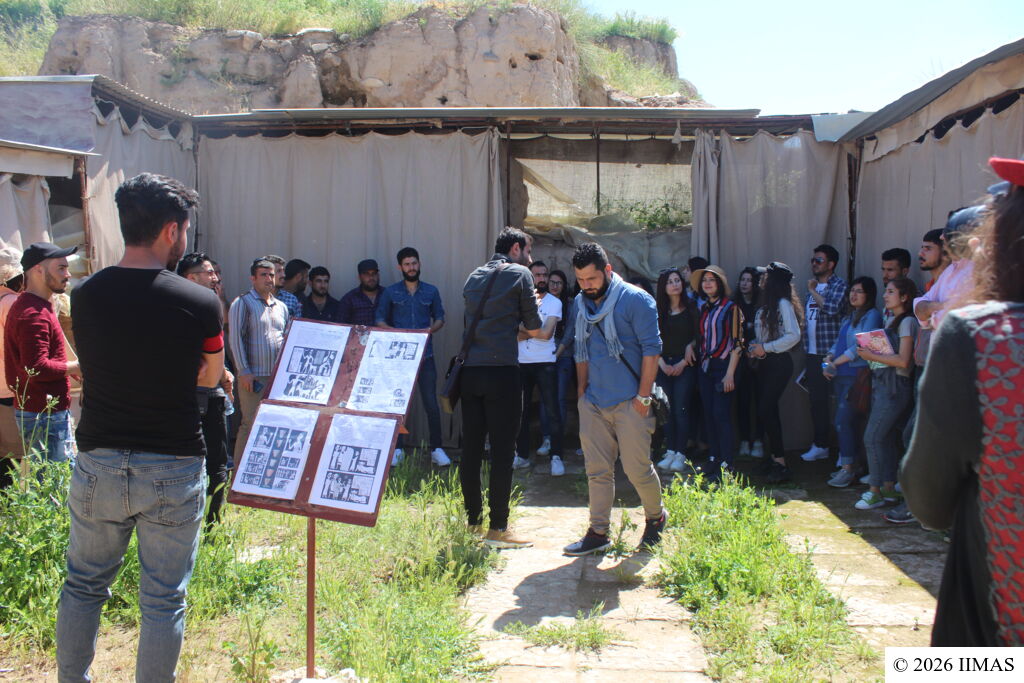
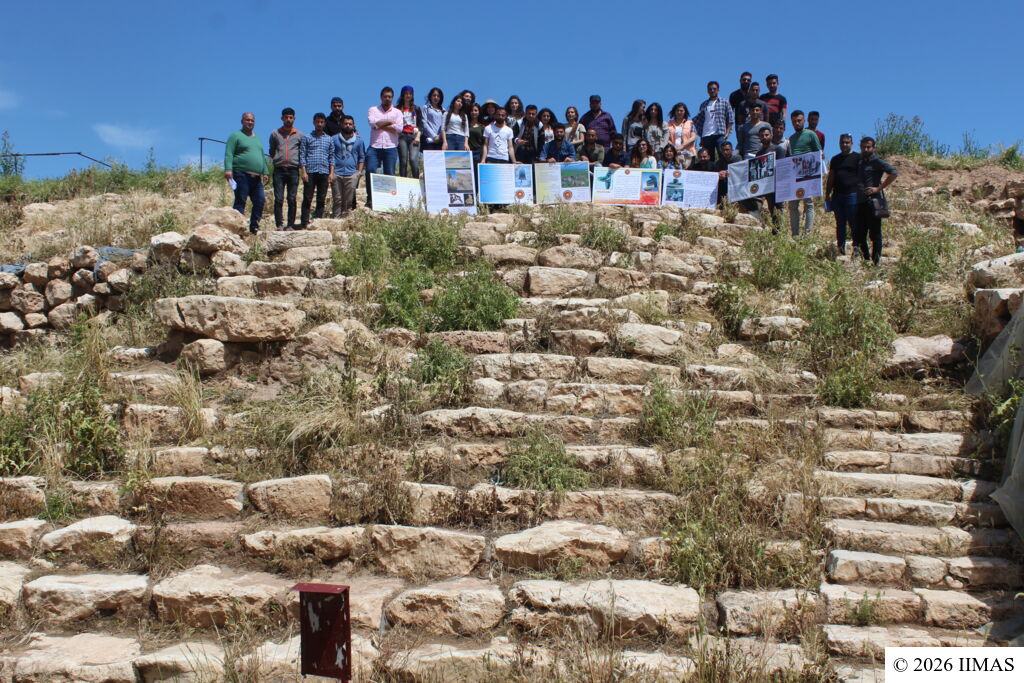
A group of students from the University of Rojava, a newly established university in Syria, visited Tell Mozan. The group consisted of 32 students, who had divided themselves into eight smaller groups. Each group had previously worked on a specific topic related to Urkesh and its material culture and had prepared a poster presenting its findings. The posters covered a range of subjects, including the history of the archaeological mission working at the site and its most important discoveries, such as the Temple area, the Palace, the royal seals, the Abi, and the famous bronze lions.
The visit began with a detailed introduction to the site and its most significant discoveries, presented by myself and the students’ supervisor, Sipan Ismail. The students showed great enthusiasm and curiosity, raising numerous questions about the religious rituals practised in the ancient city and the relationship between the god Kumarbi and Urkesh. They were also interested in the origins of the limestone used in the construction of the site and asked why the function of one section of the Palace’s service wing has not yet been definitively identified.
|
|
The students also expressed their admiration for the system developed to protect and preserve the archaeological remains, particularly its simplicity and effectiveness. Another important question concerned when excavations might be completed, allowing further discoveries about the Palace and the Kingdom of Urkesh. In particular, they expressed the hope that the Royal Archives might one day be discovered. In fact, this was perhaps the question that interested them most.
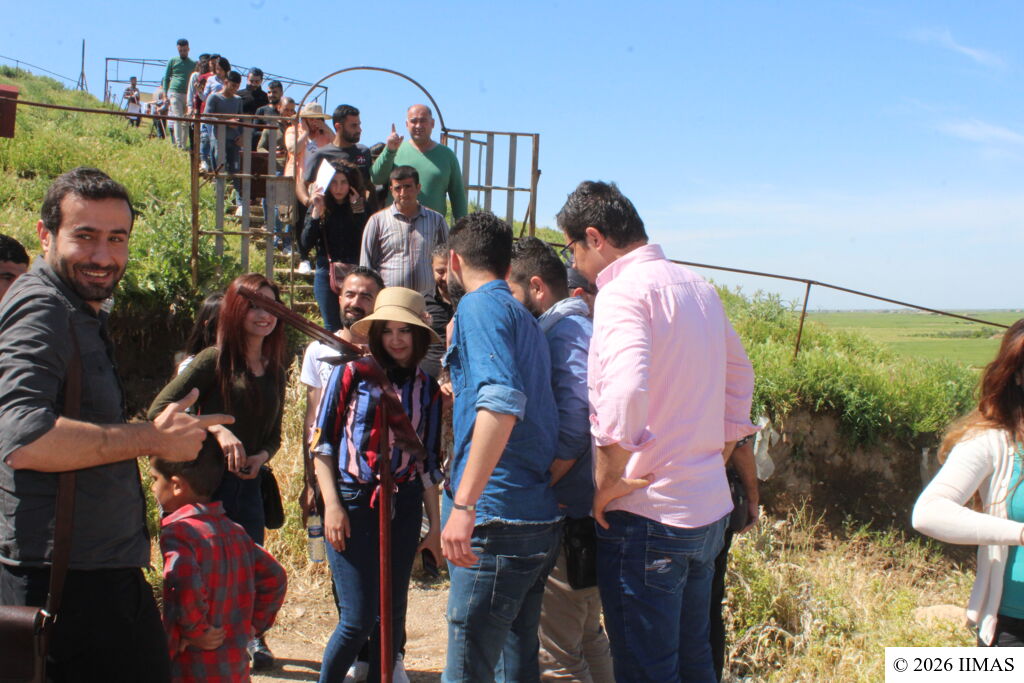
At the end of the visit, each group presented its poster on the staircase leading to the Temple, turning the area into a small open-air exhibition. This provided an opportunity for the students to compare the information they had received during the visit with what they had previously read in books and included in their own posters.
|
|
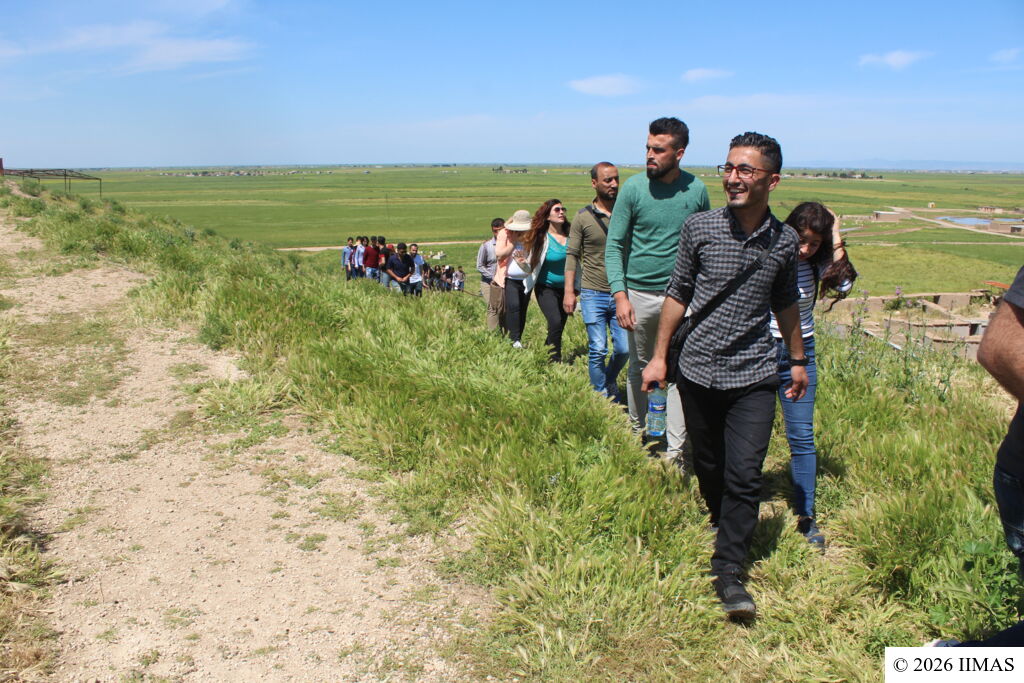
Overall, the visit went far beyond a conventional educational tour. It was, in many respects, similar to a genuine research seminar, bringing together prior preparation, direct observation, discussion, and the exchange of ideas in the very place where the history of Urkesh is being uncovered.
|
Back to top: University of Rojava